Modern vs Traditional Arabic Majlis: Choose the Perfect Style

What started as a Bedouin refuge for communal meetings and storytelling has now become the most versatile area of a house. Majlis showcases Arabic culture and its traditional elements to this day. With time and innovation, majlis have transformed and become more contemporary. For making a logical choice, one needs to understand its inherent differences. The following by Arabic Majlis Dubai blog presents a comparison between a modern and traditional Arabic majlis to determine which one is more suitable.
Fundamental Difference Between Modern and Traditional Majlis:
If you examine a modern majlis, it is difficult to comprehend the strong elements of a traditional one, as people have altered it to suit their convenience. There are apparent differences between a modern and traditional majlis, which are outlined as follows.
1. Differential Color and Styles:
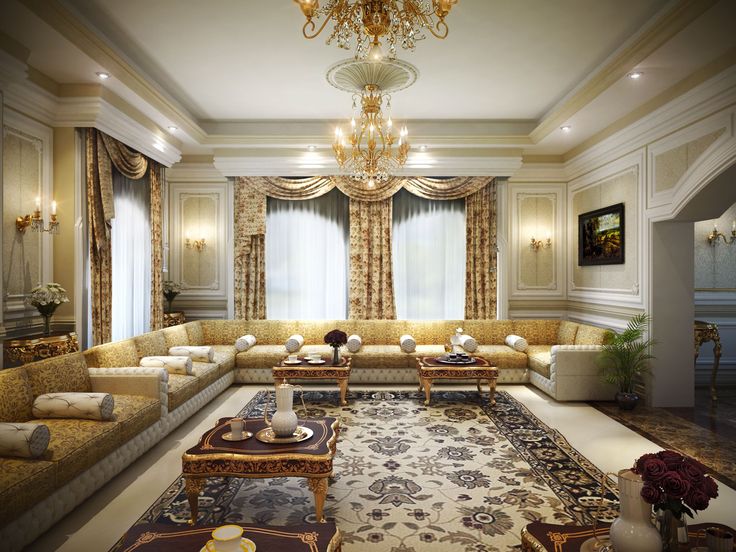
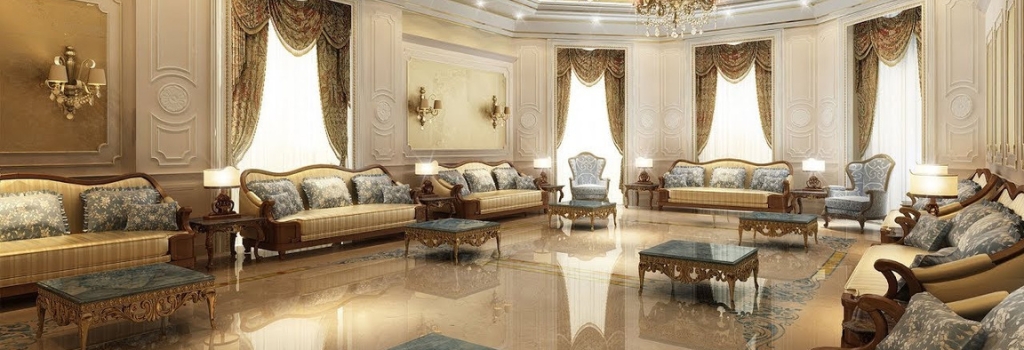
Earthy tones, deep reds, browns, rustic colors, and golds are major color options that are often chosen for furniture, carpets, and walls in a traditional style majlis. They have geometric and conventional patterns in their designs. For modern majlis, more neutral tones are chosen, accompanied by minimal accessories. Additionally, designers ensure that the overall look is clean and clear. Golden beige, turquoise blue, and muted champagne gold are among the most preferred color combinations in modern-style majlis.
2. Furniture is More Diversified
In traditional majlis, mostly floor cushions and mattresses, also known as Doshak and tehkay in Arabic, are used. These arrangements are minimalist and simple because of the Bedouin lifestyle, their needs, and to create more space for communal gatherings. Contrastingly, modern majlis is versatile in furniture. Upholstered sofas called majlis sofas, which are typically close to the ground, that leave some or no space at the base, are used. Some modern majlis have been completely westernized with furniture like chesterfields, sectionals, and ottomans as well.
3. Experimentation with Wall Designs
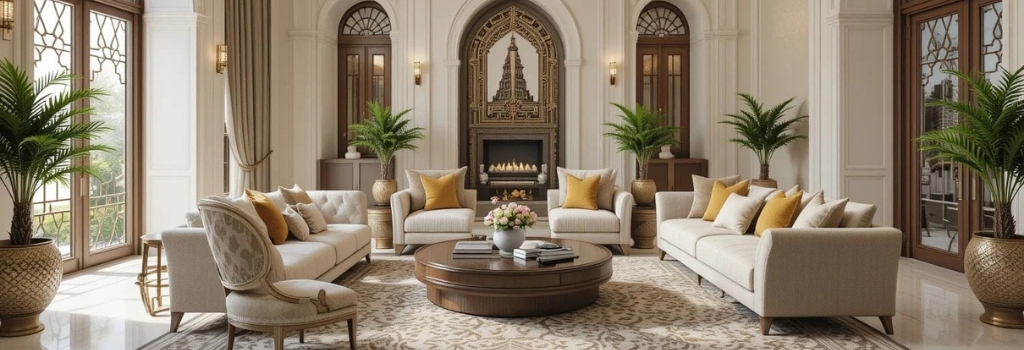
The traditional majlis initially started in tents. People would gather under a large tent and spend time together. Walls were not made here. As Arabs began settling and creating homes, traditional rugs, animal hides, and earthy colors were used to decorate the walls. Even today, the conventional majlis is made in such themes. The richness of Arabic culture is embodied in every element. However, in modern majlis, the walls are adorned with wood and metal carvings. Additionally, they feature ceramic detailing with geometric and floral patterns, and are often decorated with beautiful curtains.
4. Transformation of Floor Coverings
Carpets are not just floor covers, but a medium of traditional expression and a source of comfort. Vintage, handmade rugs with rich textures and bright colors are used in the traditional majlis. Modern majlis has vintage touches but primarily focuses on creating luxurious effects. Monochromatic themes are introduced. Geometric and floral patterns are also popular choices in floor coverings. The color range is diverse, from muted to darker colors.
5. Communal vs Closed Gatherings
The traditional Majlis is an open space that welcomes everyone. Everyone is welcome to visit, offer their opinion, and contribute to a traditional majlis. However, in modern majlis, these places still allow people to come together, but have become more private. As social norms have changed, people tend to mingle less and interact with only their close ones. Traditional setups are more open to everyone regardless of their background.
6. Diversified Majlis for Specific Needs
A conventional majlis is common for all kinds of gatherings. People come together to discuss any issues or problems prevailing in their society, yet modern majlis is more segregated. There are family majlis, corporate majlis, and religious majlis, each addressing specific issues and problems. Fundamentally, there is no division in the majlis; it’s open to all kinds of communal gatherings, from receiving condolences to addressing social issues.
7. Serve Different Purposes
There is a customary element to traditional majlis. They are places where a heritage is transferred from one generation to another. Story-telling and discussion of socio-political aspects of a society remain a significant part of these places. In contrast, modern majlis are often used for family gatherings and parties. People interact with each other for recreation. Arab cultural elements are often missing in the majlis of contemporary times.
8. Use of Gadgets
Fundamentally, gadgets are discouraged in traditional majlis. The established purpose of these places is to provide a common space for communal interaction. Gadgets like live TV and mobile phones can be highly distracting, so elders often discourage their use. Conversely, modern majlis setups are heavily accessorized with gadgets and wifi. Freedom of use is given, and it’s not considered unethical to use phones or TV during the gathering.
9. Different Lighting
For any space to offer maximum utility, lighting is significant. Soft and warm lights, such as lanterns or candles, or their imitations, with central chandeliers, are used in traditional majlis. This keeps the ambiance quite warm and cozy. For a modern majlis, lighting is different. Not necessarily a yellow light is used. To add a customary element, brass, copper, and metal coverings are used around lights. Modern pendant lighting is preferably used in these setups.
10. Hot Brew Area and Bakhoor
In traditional majlis, central places are still made for preparing hot brew. Gahwa (hot Brew) is served in Finjan (small handleless cups) to the visitors. In the contemporary design of majlis, kitchens and bars are present, but the custom of serving hot brew remains. Keeping the majlis fragrant remains critical in both modern and traditional majlis; however, pots are traditionally used for bakhoor. In modern places, mists, humidifiers, mistifiers, and smart bakhoor devices are conveniently used.
Final Words
Majlis is an Arabic culture altogether. There are inherent common Arabic elements in both types of majlis, but over time, people have customized these places according to their preferences. Modern majlis is more diverse and allows greater functionality. The aspects mentioned above are where they differ from each other.